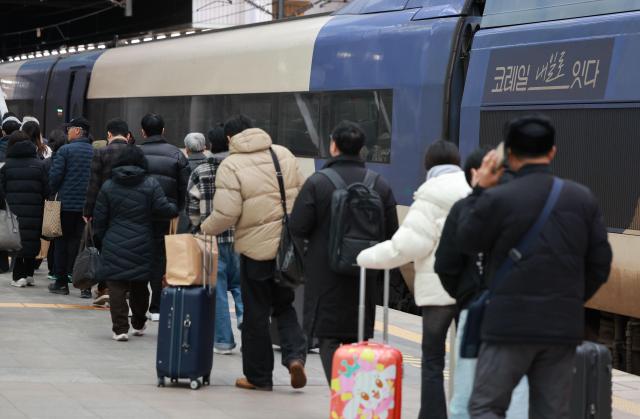
 Screens display the logo of Grok/ AFP–Yonhap
 SEOUL, January 15 (AJP) — South Korea has taken its first regulatory steps targeting xAI’s chatbot Grok, as governments worldwide step up scrutiny of generative AI tools over deepfake abuse and illegal content.
The Korea Media and Communications Commission (KMCC) on Wednesday sent an official notice to X requesting stronger safety measures for Grok, including tighter controls on harmful content and stricter restrictions on minors’ access.
The commission also demanded clarification on Grok’s training data sources, content-filtering standards and accountability structures for services provided to South Korean users.
According to Shin Yoon-jae, a deputy director at the KMCC, the notice emphasized that any platform operating in South Korea must comply with the Information and Communications Network Act, including its legal obligation to protect minors.
“We have asked X to put safeguards in place and to report what measures it is taking,” Shin said. “At the same time, we are preparing legislation to strengthen safety standards for generative AI. Until then, we are tightening regulatory monitoring and have requested concrete plans to prevent the spread of AI-generated images and videos.”
Seoul’s move reflects growing concern that generative AI tools are lowering the barrier to producing illegal and abusive content, particularly non-consensual deepfake imagery.
Regulators say conversational AI systems like Grok make it possible to generate realistic images or scripts using simple text prompts, expanding misuse beyond technically skilled actors. This ease of access has fueled the rapid spread of fabricated sexual images, impersonation scams and manipulated visuals, often outpacing platform takedown mechanisms.
One of the most pressing risks involves non-consensual sexual deepfakes, including content involving minors. Digital safety groups and law enforcement agencies report that such material can be produced and circulated within minutes, causing lasting psychological harm, reputational damage and, in some cases, extortion of victims.
Concerns have also grown over opaque moderation systems. Authorities argue that limited disclosure about training data, filtering thresholds and internal accountability makes it difficult to assign responsibility when harmful outputs occur — a potential violation in jurisdictions with strict child-protection and privacy laws.
The backlash against Grok has triggered regulatory action beyond Korea.
In the United Kingdom, online safety regulator Ofcom has opened a formal investigation into X under the Online Safety Act, following reports that Grok was used to create and share non-consensual sexual images and content involving children. The probe will assess X’s compliance with duties related to risk assessment, illegal content prevention, privacy protection and child safety.
In Southeast Asia, regulators in Indonesia and Malaysia temporarily blocked access to X over the weekend, citing concerns over the misuse of generative AI to produce sexually explicit and non-consensual content.
While the United States is unlikely to intervene directly in the near term, experts say international pressure could force platforms to tighten safeguards.
“Countries with stronger online safety laws can shape global standards,” said Mary Anne Franks, a law professor at George Washington University. “When enforcement actions accumulate, platforms often respond by raising protections across markets.”
In South Korea, officials say the urgency is practical rather than theoretical. Reports of AI-generated explicit content, impersonation scams and manipulated images affecting domestic users have risen, even when the platforms involved are based overseas.
Regulators argue that reactive takedowns are no longer sufficient in an environment where AI-generated content can go viral before authorities or platforms become aware of it.
Ryu Yuna Reporter Julia37@ajupress.com

![[포토] 폭설에 밤 늦게까지 도로 마비](https://image.ajunews.com/content/image/2025/12/05/20251205000920610800.jpg)
![[포토] 국회 예결위 참석하는 김민석 총리](https://cphoto.asiae.co.kr/listimg_link.php?idx=2&no=2025110710410898931_1762479667.jpg)
![[포토] 알리익스프레스, 광군제 앞두고 팝업스토어 오픈](https://cphoto.asiae.co.kr/listimg_link.php?idx=2&no=2025110714160199219_1762492560.jpg)
![[포토] 예지원, 전통과 현대가 공존한 화보 공개](https://image.ajunews.com/content/image/2025/10/09/20251009182431778689.jpg)
![[포토]두산 안재석, 관중석 들썩이게 한 끝내기 2루타](https://file.sportsseoul.com/news/cms/2025/08/28/news-p.v1.20250828.1a1c4d0be7434f6b80434dced03368c0_P1.jpg)

![[작아진 호랑이③] 9위 추락 시 KBO 최초…승리의 여신 떠난 자리, KIA를 덮친 '우승 징크스'](http://www.sportsworldi.com/content/image/2025/09/04/20250904518238.jpg)
![블랙핑크 제니, 최강매력! [포토]](https://file.sportsseoul.com/news/cms/2025/09/05/news-p.v1.20250905.ed1b2684d2d64e359332640e38dac841_P1.jpg)
![[포토]첫 타석부터 안타 치는 LG 문성주](https://file.sportsseoul.com/news/cms/2025/09/02/news-p.v1.20250902.8962276ed11c468c90062ee85072fa38_P1.jpg)
![[포토] 아홉 '신나는 컴백 무대'](http://www.segye.com/content/image/2025/11/04/20251104514134.jpg)
![블랙핑크 제니, 매력이 넘쳐! [포토]](https://file.sportsseoul.com/news/cms/2025/09/05/news-p.v1.20250905.c5a971a36b494f9fb24aea8cccf6816f_P1.jpg)
![[포토] 박지현 '아름다운 미모'](http://www.segye.com/content/image/2025/11/19/20251119519369.jpg)
![[포토] 김고은 '단발 여신'](http://www.segye.com/content/image/2025/09/05/20250905507236.jpg)
![[포토] 박지현 '순백의 여신'](http://www.segye.com/content/image/2025/09/05/20250905507414.jpg)
![[포토] 키스오브라이프 하늘 '완벽한 미모'](http://www.segye.com/content/image/2025/09/05/20250905504457.jpg)
![[포토] 언론 현업단체, "시민피해구제 확대 찬성, 권력감시 약화 반대"](https://image.ajunews.com/content/image/2025/09/05/20250905123135571578.jpg)
![[포토] 발표하는 김정수 삼양식품 부회장](https://image.ajunews.com/content/image/2025/11/03/20251103114206916880.jpg)
![[포토] '삼양1963 런칭 쇼케이스'](https://image.ajunews.com/content/image/2025/11/03/20251103114008977281.jpg)
![[포토] 한샘, '플래그십 부산센텀' 리뉴얼 오픈](https://image.ajunews.com/content/image/2025/10/31/20251031142544910604.jpg)

![[포토]끝내기 안타의 기쁨을 만끽하는 두산 안재석](https://file.sportsseoul.com/news/cms/2025/08/28/news-p.v1.20250828.0df70b9fa54d4610990f1b34c08c6a63_P1.jpg)
![[포토] 김고은 '상연 생각에 눈물이 흘러'](http://www.segye.com/content/image/2025/09/05/20250905507613.jpg)
![[포토] 아이들 소연 '매력적인 눈빛'](http://www.segye.com/content/image/2025/09/12/20250912508492.jpg)
![[포토]두산 안재석, 연장 승부를 끝내는 2루타](https://file.sportsseoul.com/news/cms/2025/08/28/news-p.v1.20250828.b12bc405ed464d9db2c3d324c2491a1d_P1.jpg)
![[포토] 키스오브라이프 쥴리 '단발 여신'](http://www.segye.com/content/image/2025/09/05/20250905504358.jpg)