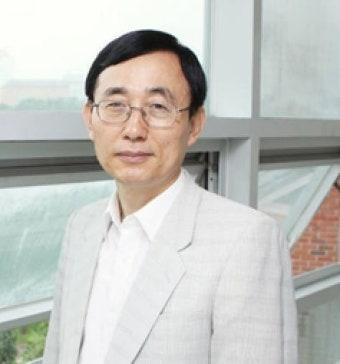
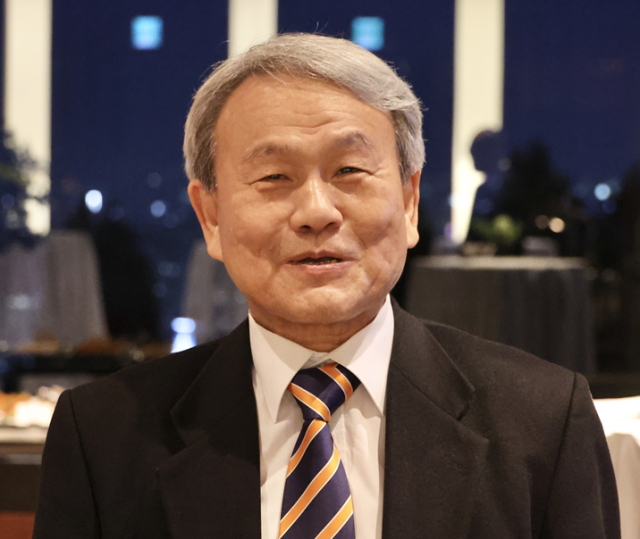
 This file image shows columnist Cho Chong-dae. AJP Han Jun-gu
 [This opinion piece was contributed by Choe Chong-dae, a prominent columnist and a longstanding member of the Royal Asiatic Society Korea.]
SEOUL, January 19 (AJP) - Belgium is a constitutional monarchy in Western Europe, with Brussels as its capital. Yet beyond its role as a political and diplomatic hub of Europe, Belgium often enters the global imagination through a gentler and more playful symbol: the Smurfs. These small blue characters—whimsical in appearance yet enduring in influence—have become one of the country’s most recognizable cultural ambassadors, reminding us that a nation’s identity is sometimes conveyed as powerfully through imagination and humor as through history and diplomacy.
Created by the Belgian cartoonist Peyo (Pierre Culliford, 1928–1992), the Smurfs are an integral part of Belgium’s rich comics tradition. Living together in a magical forest village of mushroom-shaped houses, they embody values of cooperation, friendship, and community. Beloved far beyond Belgium’s borders, the Smurfs are so closely associated with the country that they are officially regarded as a national symbol—proof that cultural soft power can sometimes be expressed most effectively through creativity and warmth.
Belgium’s relationship with Korea, however, is grounded not in fantasy but in a long and meaningful shared history. Strong diplomatic ties date back to 1892, even before the two countries formally signed a treaty of friendship in 1901. Belgium opened its first legation in Korea in 1903, marking the beginning of official diplomatic engagement between the two nations.
A testament to this early relationship still stands today in Nanhyeon-dong, Gwanak-gu, southern Seoul: the former Belgian Consulate building, constructed in 1905 and renovated in 1983. With its classical Ionic columns and preserved fireplaces, the structure serves not only as a window into early 20th-century Western architecture in Korea, but also as a bridge between classical heritage and modern artistic expression. Recognized as Historical Site No. 254, it remains a protected part of Korea’s architectural legacy. Since September 2004, the building has been home to the Nam(South) Seoul Living Arts Museum.
Following Japan’s annexation of Korea in 1910, most foreign diplomatic missions were forced to withdraw. Belgium closed its post in Seoul in 1918, yet it was among the first nations to recognize Korea as a sovereign state after liberation and the establishment of a new government in 1948. Belgium officially re-established its embassy in Korea in 1970.
Perhaps the most profound demonstration of Belgium’s dedication to Korea came during the Korean War (1950–1953). Under the United Nations Command, approximately 3,000 Belgian volunteers fought alongside Korean and the U.N. allied forces. More than 100 of them made the ultimate sacrifice. Their contribution remains a deeply respected chapter in the shared history of the two nations.
In September 2011, the 110th anniversary of diplomatic relations between Korea and Belgium was commemorated with a special concert and reception at the KBS Hall. Organized jointly by the Belgian Embassy in Seoul and KBS, the event featured the KBS Symphony Orchestra under the baton of Belgian conductor Patrick Davin. The invited guests also enjoyed the distinctive flavors of Belgian beer—an art form in its own right, with over 1,000 varieties produced across the country.
More recently, Korea welcomed Her Royal Highness Princess Astrid of Belgium, who led a 256-member delegation during Belgium’s fourth economic mission to South Korea, held from June 10 to 17, 2017 Since King Philippe’s accession, Princess Astrid has been entrusted with leading Belgian economic missions abroad, underscoring their strategic importance.
The delegation included Deputy Prime Minister and Minister of Foreign Affairs Didier Reynders, as well as Secretary of State for Foreign Trade Pieter De Crem. During her visit, Princess Astrid was appointed an honorary citizen of Seoul. One of the most symbolic moments of the mission was her visit to Panmunjom, the Joint Security Area in the Demilitarized Zone—a place that powerfully represents both division and the enduring hope for peace.
I had the honor of attending the Korea–Belgium Friendship Concert and reception on June 12, 2017, held at Kumho Art Hall at Yonsei University. Princess Astrid and many distinguished guests were present, including Belgium’s Ambassador to Korea, Adrien Théatre, and Yonsei University President Kim Yong-hak. The chamber music concert, performed by outstanding musicians from the Queen Elisabeth Music Chapel—under the honorary chairmanship of Her Majesty Queen Paola—was refined, moving, and deeply memorable.
Exchanging greetings and shaking hands with Princess Astrid was a personal honor. I was particularly impressed by her genuine interest in Korean culture and media. Her visit, I believe, further strengthened the foundation for fruitful bilateral relations between Korea and Belgium.
I also had the pleasure of attending the 2025 Belgian King’s Day reception in Seoul, held on November 13 at the Four Seasons Hotel, Seoul. The event celebrated the strong bilateral ties between Belgium and Korea and looked ahead to the 125th anniversary of diplomatic relations in 2026. Ambassador Bruno Jans highlighted the upcoming commemorations, including the 75th anniversary of Belgian troop involvement in the Korean War.
Belgium is also a cultural crossroads, blending Germanic and Roman influences into a distinctive national identity. Like its neighbors France and Germany, it possesses remarkable diversity, yet it has forged its own unique artistic, musical, and culinary voice.
That voice resonates powerfully in world music through the legacy of Adolphe Sax, the Belgian inventor of the saxophone in the 1840s. In his hometown of Dinant, saxophone sculptures line the streets, and commemorative events continue to celebrate his enduring influence, including those marking the 200th anniversary of his birth.
From Smurfs to saxophones, from battlefields to concert halls, Belgium’s connection with Korea reflects not only shared history but also shared values. It is a relationship built on respect, sacrifice, creativity, and cultural exchange—one that continues to evolve with quiet strength and enduring friendship.
---About the Author---
Choe Chong-dae is a prominent columnist and a longstanding member of the Royal Asiatic Society Korea. An enthusiast of international cultural and historical affairs, he has contributed regular opinion columns to The Korea Times for more than four decades. He also serves on the editorial board of the Newsletter of the Korea-America Association and is the founding director of the Korea–Swedish Association. In 2010, he was awarded Sweden’s Royal Order of the Polar Star, one of the country’s most prestigious honors.
Choe Chong-dae Columnist
![[포토] 폭설에 밤 늦게까지 도로 마비](https://image.ajunews.com/content/image/2025/12/05/20251205000920610800.jpg)
![[포토] 알리익스프레스, 광군제 앞두고 팝업스토어 오픈](https://cphoto.asiae.co.kr/listimg_link.php?idx=2&no=2025110714160199219_1762492560.jpg)
![[포토] 국회 예결위 참석하는 김민석 총리](https://cphoto.asiae.co.kr/listimg_link.php?idx=2&no=2025110710410898931_1762479667.jpg)

![[포토] 예지원, 전통과 현대가 공존한 화보 공개](https://image.ajunews.com/content/image/2025/10/09/20251009182431778689.jpg)
![[포토]두산 안재석, 관중석 들썩이게 한 끝내기 2루타](https://file.sportsseoul.com/news/cms/2025/08/28/news-p.v1.20250828.1a1c4d0be7434f6b80434dced03368c0_P1.jpg)
![[작아진 호랑이③] 9위 추락 시 KBO 최초…승리의 여신 떠난 자리, KIA를 덮친 '우승 징크스'](http://www.sportsworldi.com/content/image/2025/09/04/20250904518238.jpg)
![블랙핑크 제니, 매력이 넘쳐! [포토]](https://file.sportsseoul.com/news/cms/2025/09/05/news-p.v1.20250905.c5a971a36b494f9fb24aea8cccf6816f_P1.jpg)
![[포토] 박지현 '아름다운 미모'](http://www.segye.com/content/image/2025/11/19/20251119519369.jpg)
![[포토]첫 타석부터 안타 치는 LG 문성주](https://file.sportsseoul.com/news/cms/2025/09/02/news-p.v1.20250902.8962276ed11c468c90062ee85072fa38_P1.jpg)
![블랙핑크 제니, 최강매력! [포토]](https://file.sportsseoul.com/news/cms/2025/09/05/news-p.v1.20250905.ed1b2684d2d64e359332640e38dac841_P1.jpg)
![[포토] 아홉 '신나는 컴백 무대'](http://www.segye.com/content/image/2025/11/04/20251104514134.jpg)

![[포토] 김고은 '단발 여신'](http://www.segye.com/content/image/2025/09/05/20250905507236.jpg)
![[포토] 키스오브라이프 하늘 '완벽한 미모'](http://www.segye.com/content/image/2025/09/05/20250905504457.jpg)
![[포토] 언론 현업단체, "시민피해구제 확대 찬성, 권력감시 약화 반대"](https://image.ajunews.com/content/image/2025/09/05/20250905123135571578.jpg)
![[포토] 박지현 '순백의 여신'](http://www.segye.com/content/image/2025/09/05/20250905507414.jpg)
![[포토] 발표하는 김정수 삼양식품 부회장](https://image.ajunews.com/content/image/2025/11/03/20251103114206916880.jpg)
![[포토] '삼양1963 런칭 쇼케이스'](https://image.ajunews.com/content/image/2025/11/03/20251103114008977281.jpg)
![[포토]끝내기 안타의 기쁨을 만끽하는 두산 안재석](https://file.sportsseoul.com/news/cms/2025/08/28/news-p.v1.20250828.0df70b9fa54d4610990f1b34c08c6a63_P1.jpg)
![[포토] 김고은 '상연 생각에 눈물이 흘러'](http://www.segye.com/content/image/2025/09/05/20250905507613.jpg)
![[포토] 한샘, '플래그십 부산센텀' 리뉴얼 오픈](https://image.ajunews.com/content/image/2025/10/31/20251031142544910604.jpg)
![[포토] 아이들 소연 '매력적인 눈빛'](http://www.segye.com/content/image/2025/09/12/20250912508492.jpg)
![[포토]두산 안재석, 연장 승부를 끝내는 2루타](https://file.sportsseoul.com/news/cms/2025/08/28/news-p.v1.20250828.b12bc405ed464d9db2c3d324c2491a1d_P1.jpg)
![[포토] 키스오브라이프 쥴리 '단발 여신'](http://www.segye.com/content/image/2025/09/05/20250905504358.jpg)